Gloucestershire Archives
An Archivist remembers….
I started working at Gloucestershire Record Office (as it then was) on 31st July 1989, so it seemed tidy to retire on 31st July 2026, especially as it’s a Friday! I began and end my career in the Collections Management team, but spent most of my years either as an Archivist in the Searchroom, or attached to that team. Over these 37 years I’ve worked with some wonderful colleagues, many fantastically dedicated volunteers who have seen so many valuable projects through to completion, and several local groups and organisations. I’ve had the chance to acquire many new skills and interests, including how to use maps to investigate features in the landscape, and how to conduct successful reminiscence recordings. We won’t mention copyright!
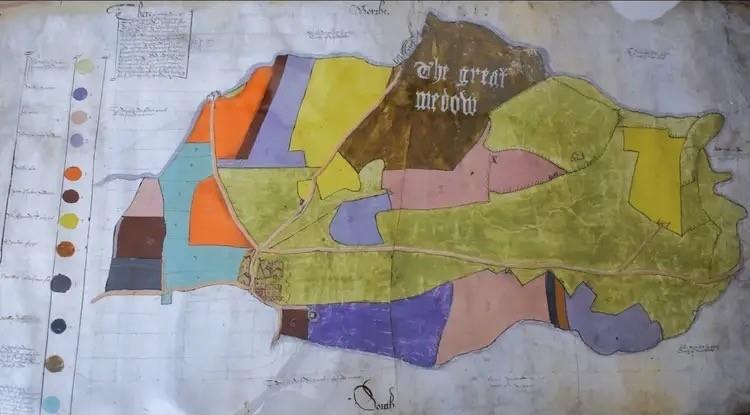
You haven’t seen the last of me. Although I don’t plan on volunteering myself, I hope to return as a researcher later in the year. And it seems appropriate to nominate my favourite document held in the Archives. As many colleagues know all too well, that would be D1099/P2, the 17th Century post-enclosure map of Homestallend, part of the Manor of Todenham, which is attractively coloured, has nice added features, and unusually shows buildings in 3D, rather than the usual block plan.
As one of my aims now is to learn at least rudimentary Japanese, I hope this isn’t Sayonara! Best wishes everyone!
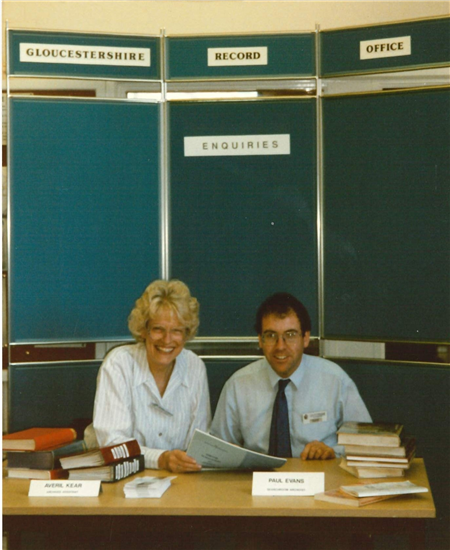
Paul Evans
Gloucestershire Archives named joint winner of national sustainability award
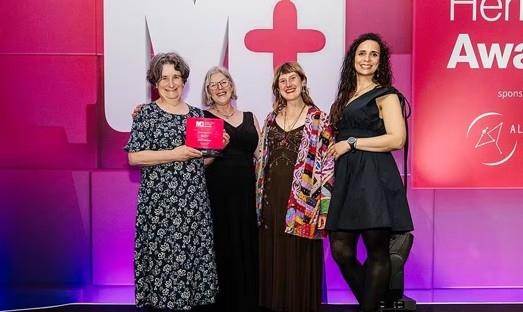
Heather Forbes, Christina Wheeler and Hannah Basnett (Green Pledge Project sponsor, project manager and project officer) receiving the award from paleoanthropologist, author, and stand-up comedian Ella Al-Shamahi in London, May 2026). Photo credit: Hayley Bray
Gloucestershire Archives has been named joint winner of Sustainable Project of the Year at the Museums + Heritage Awards 2026, alongside Lambeth Palace. The award recognises outstanding environmental action across the heritage sector and celebrates projects that show how sustainability can be embedded into both buildings and day-to-day practice.
The Archives received the award for its two-year Green Pledge Project funded by the National Lottery Heritage Fund, which brought together work on collections, community engagement and practical carbon reduction. Through the project, staff, volunteers and partners explored Gloucestershire’s environmental history while also taking direct action to reduce the organisation’s own environmental impact.
Work included an environmental audit, the installation of solar panels and electric vehicle charging points, biodiversity improvements, waste reduction, and the replacement of energy-hungry systems with lower-energy alternatives. The project contributed to a major improvement in the building’s energy performance, moving it from a G rating to an A rating.
The project also had a strong public-facing element. Gloucestershire Archives catalogued and promoted environmental records, collected new environmental collections, worked with partners including Project Grow and Wiggly in the community garden, and used creative activities such as the travelling exhibitions, talks and an installation at Cheltenham Science Festival to encourage people to make personal climate pledges.
Judges praised the Green Pledge Project as an example of broad community impact and deep organisational commitment to environmental sustainability. For Gloucestershire Archives, the award is not only national recognition for a successful project, but also a powerful statement about the role archives can play in helping communities understand the past, respond to the climate crisis and create lasting change for the future.
Read all about it here
The project was also awarded ‘highly commended’ in Gloucestershire County Council’s own excellence awards last month.
Gloucestershire Archives Summer Work Experience Week (13–17 July)
Between 13 and 17 July, Gloucestershire Archives hosted its second summer group work experience programme. Eight students, aged 15–17 (Years 10–12), from seven schools across the county took part: Holmleigh Park High School, Severn Vale School, Ribston Hall High School, Stroud High School, Churchdown School Academy, Newent Community School and Cheltenham Bournside School.
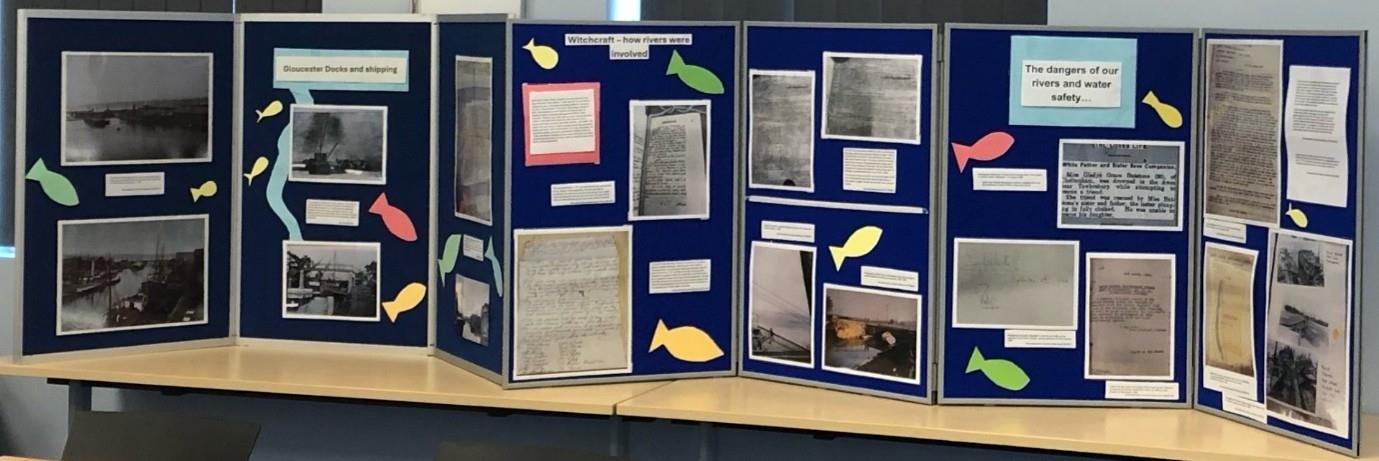
The main project for the week was to work collaboratively to create an exhibition on the community noticeboards for our September Saturday event, Go with the Flow which will explore the theme of rivers.
The students began by searching our online catalogue for documents relating to local rivers and waterways. Through their own research, they identified eight topics to focus on: river dangers and water safety; flooding in 1947 and during the 1960s and 1970s; poetry inspired by local rivers; the Purton Hulks, Britain's largest ship graveyard; links between witchcraft and rivers; Gloucester Docks and shipping; and fishing.
As part of the project, the students were shown how to select, order and process document requests before accompanying staff into the strongrooms to retrieve the records. They learned how to assess suitable material for display, considering whether items had a strong visual appeal or “wow factor”, were robust enough to be copied, and were accessible and legible for visitors.
Each selected item required a caption that was clear, concise and informative, while also including the document reference so that visitors interested in viewing the original records could locate them in our searchroom in the future.
In addition, each student selected one or more river-related documents to read or discuss on film. The resulting video will be shown during the September event, and all of the students thoroughly enjoyed taking part in this activity.
It was particularly rewarding to observe how the group approached the final stage of the exhibition project. By the end of the week, the students were confidently working together, chatting, sharing ideas and helping one another as they arranged the copied documents and decorations on the display boards.
With both the exhibition and film completed, the students spent their final day with the Gloucestershire Family History Society (GFHS), researching their own families and local businesses. One student discovered that she was related to someone who had “Santa Claus” as part of their name, much to the amusement of the entire group.
Overall, the week was a great success, providing the students with an insight into archive work while helping them develop research, teamwork and communication skills through a real-life public engagement project.
The Hub at the Festival of Archaeology
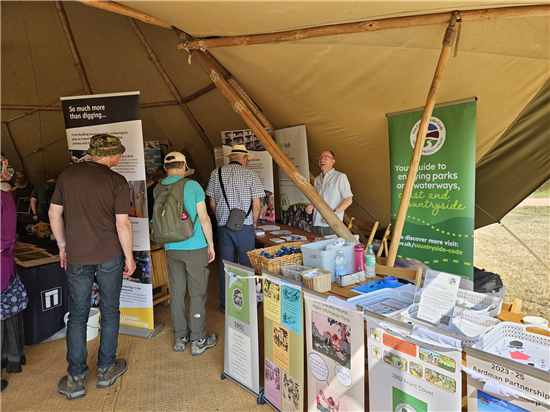
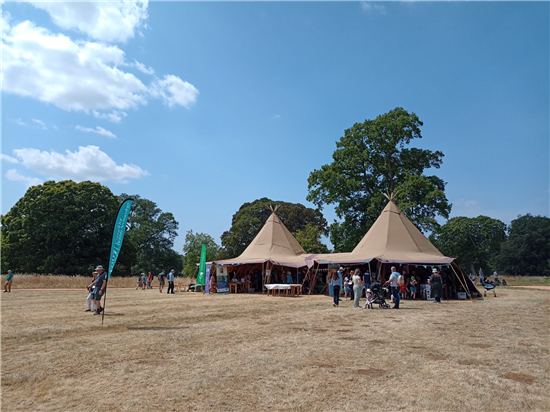
A few weeks ago, Ant and I had the opportunity to attend the Festival of Archaeology launch event at Westonbirt Arboretum. This event was organised by the Council for British Archaeology, who invited us to have a pop-up stall during the day.
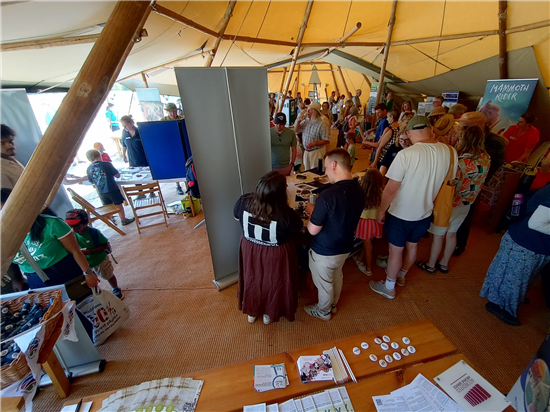
The event gathered heritage organisations, archaeological groups and reenactors who offered archaeological and heritage-themed talks, stalls and activities throughout the day. Around 6,500 people attended the event, so it was all hands on deck at our stall.
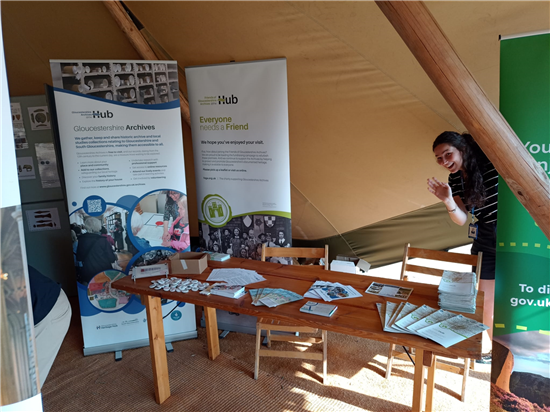
We were set up in the shade (the day reached the low 30's, so we were very grateful) alongside other heritage organisations. Throughout the day, we greeted a whopping 75 visitors. We had productive conversations with visitors as we could hear directly about their experiences of our service. We were pleased to hear that many visitors had either heard of or used the Hub before.
It was important for us to represent all areas of the Hub, so we brought along lots of Police Archives, GFHS, Gloucestershire Archives and Heritage Walking Trail flyers. We also encouraged families to come along to the garden, especially as it's now the summer holidays. Our Heritage Hub pencils and ARA pin badges also went down well with younger visitors!
Before we left, we had a quick look around the reenactment stalls and had the opportunity to network with a few archaeological organisations. It was a successful day of outreach, and we're looking forward to seeing some new faces at the Archives.
Niamh Devlin